
Shoppable Video: 7 Tests for Shopify Sales
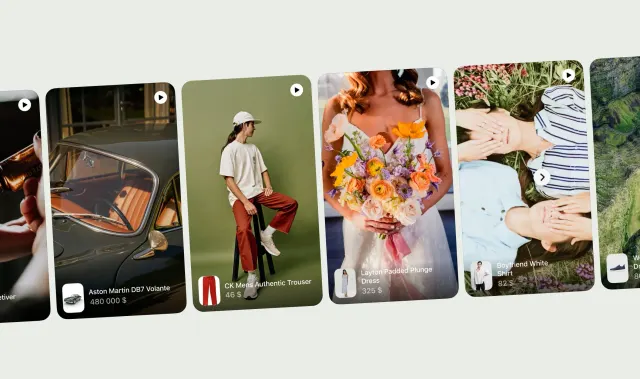
To test whether shoppable video helps Shopify sales, change one part of the shopping experience at a time and define the result you want to observe. More video views can be useful, but they do not by themselves show that the store earned additional revenue.
The seven tests below are suggested experiments, not reported SwipeUp customer results. Use them after setting up your first video feed.
1. Answer one buying question
Read recent product questions and support conversations. Pick a question that movement or scale can clarify, such as “Will this bag fit a laptop?” Record a direct demonstration and compare it with the clip you currently show.
Write the hypothesis before publishing: “A capacity demonstration will help visitors choose the correct bag size.” Choose an outcome connected to that question, such as product selection or add-to-cart, and watch for downstream orders and returns. Do not declare success solely because the new opening frame gets more plays.
2. Match each clip to its product
Watch every clip and open its product tag. Confirm the destination matches the item shown, including the design or version when relevant. A demonstration of one product followed by an unrelated product panel creates a new decision for the shopper.
Try a tightly focused feed on a product page before showing a mixed catalog. Keep the number of clips stable while testing relevance so you can interpret the change. The feed creation guide shows the product selection step.
3. Make the demonstration work without sound
Play the video muted on a phone. If an essential instruction exists only in narration, add a caption or a clear visual step. Keep text away from product cards and player controls, and leave it on screen long enough to read.
Compare the same demonstration before and after the caption change. Inspect completion and product interaction alongside the purchase outcome. Do not add a different offer or opening scene at the same time; that would make it harder to tell which change helped.
4. Put the video beside the question it answers
Try a sizing clip near fit details or a setup clip near the usage section. Preserve access to price, options and the purchase button. An above-the-fold placement deserves a loading check because media can compete with the content a shopper needs first.
Preview both narrow and wide screens. If you use an overlay, test it with cookie controls, chat and the cart open. Our product page Stories walkthrough explains the theme editor setup; template assignments determine which products receive the section.
5. Compare a demonstration with a customer perspective
Use the same product and placement. One version might show the steps clearly; another might explain how a customer uses the item in daily life. Ask which unanswered question each version addresses.
There is no universal mix of customer footage and studio content that every store should copy. Keep the footage relevant and obtain permission before publishing. The UGC approval guide includes a record you can use for source, rights, disclosure and product mapping.
6. Remove friction from the product action
Follow the video-to-cart path yourself. Check product availability, option selection, visible prices, error messages and the return path after closing the player. Include mobile Safari and Chrome if they represent meaningful traffic for your store.
Log the exact failure, page and device. A broken product destination needs a fix; it does not need an experiment to justify leaving it broken. After fixing it, verify that the cart contains the expected item and that other widgets still work.
7. Retire clips that no longer match the offer
Review videos after a product redesign, packaging change, promotion or stock change. A popular clip can still be misleading when its offer expires. Keep a record of which feeds use each asset so one correction reaches every placement.
Replace outdated content with a current demonstration and record the change date. Compare equivalent periods where possible, but account for seasonal demand and promotion changes. Our UGC planning guide provides a maintenance rhythm.
Use a small experiment record
Copy these fields into your team document before starting:
- Page and audience: the eligible product pages, devices and traffic sources.
- Hypothesis: the question the change should resolve.
- Single change: the clip, caption, position or product mapping being tested.
- Primary outcome: for example, orders per eligible session, using the same denominator in both groups.
- Supporting signals: player opens, watch time, product interactions and support questions.
- Guardrails: mobile loading, cart errors and return rate when enough time has passed.
- Dates and context: start, end, promotions, inventory and other page changes.
- Decision: keep, revise or stop, with the evidence and uncertainty recorded.
Use SwipeUp analytics to inspect the available video metrics, and keep the definitions alongside the report. Do not compare video viewers’ conversion rate with all visitors’ conversion rate as though the groups were randomly assigned. Interested shoppers may be more likely to watch in the first place.
There is no fixed number of days that makes every test reliable. Low traffic and infrequent purchases can require more observation. If the sample is too small, report that rather than turning a handful of orders into a percentage-lift claim.
Common questions
How long should a product video be?
Long enough to answer its question clearly. Start with the useful action, remove repetition, and inspect where viewers stop. A fixed duration is not a substitute for a complete demonstration.
Should I change all product pages at once?
A limited rollout is easier to inspect and reverse. Choose pages with a clear need, then expand once playback, shopping controls and measurement work as expected.
Which metric proves that video increased sales?
No engagement metric proves it on its own. A well-designed randomized test can estimate incremental impact; an attribution dashboard or simple before-and-after comparison answers a different, narrower question.
Let shoppers see your products in action
Add product demos and customer videos to your Shopify store. Start free or try a paid plan for 14 days.
Start free